
If they don’t give you a seat at the table, bring a folding chair.
Shirley Chisholm
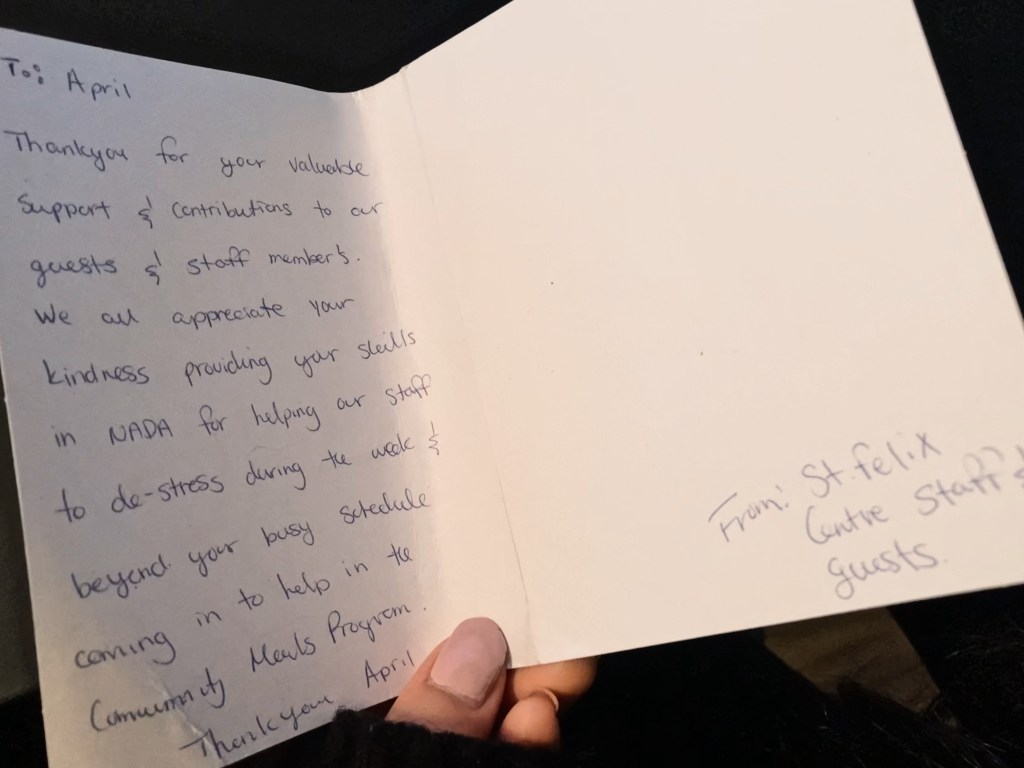
In 2019, I offered free standardized NADA 5-point ear acupuncture to high-stress & high-pressure work environments to support those with addictions, trauma, mental health conditions, stress & anxiety, to ultimately promote community wellness.
BRIEF UNDERGROUND HISTORY
For over 2500 years, people have been practicing auricular therapy in the treatment of diseases. After 1957, the international scientific community recognized that the mechanisms of auricular acupuncture have a close relationship with the entire body. In Traditional Chinese Medicine, the ear is directly or indirectly connected to 12 meridians – and when stimulated can restore balance.
Auricular acupuncture’s 5 Needle Protocol (NADA) is a safe, simple and effective treatment designed and applied for pain relief, stress, trauma, recovery support, insomnia, and depression.
Auricular acupuncture is a convenient and basic method for treating many conditions.
The history of NADA begins with Hong Kong neurosurgen Dr. Wen who was researching the connection between the ancient Chinese practice of ear acupuncture and addiction treatment, and later systematized into a protocol by NY doctors in the late 1970s.
The 1970s was one of the most grim chapters in The Bronx’s history – reaching significant poverty – while also marking the spread of acupuncture treatment for addiction treatment from The Bronx to the rest of the United States.
The decay of The Bronx was due to several factors – one of which was the completion of the Cross Bronx Expressway, an urban renewal project for New York City, that ironically led to extreme urban decay, displacing thousands of residents from their homes and several local businesses. The decreased property values, increased vacancy rates, lack in home maintenance, and neglect of support for impoverished communities caused some neighbourhoods to fill with high crime and gangs – plaguing streets with waves of arson.
Community groups staged sit-ins at several hospitals in the poor areas of New York City to call for better medical care. In the South Bronx, the Young Lords (a Puerto Rican group) took over an administrative building at Lincoln hospital and negotiated for 12 hours – nailing the door shut – demanding more funds for the hospital, a grievance staff, a day-care centre, and better pay for hospital workers. Another sit-in a few months later that lasted three days developed and was aimed at getting the doctors to stop practicing abortions. Later that November, a five-hour protest by the Young Lords, Black Panthers and their white supporters forced the administrators of Lincoln Hospital to agree to set up an inpatient drug-treatment program – run by former drug users – Lincoln Detox.
On the first day of Lincoln Detox, a line up of users formed at the door of the hospital. Volunteers had everyone place their weapons in a box and the patients were treated with methadone. Gradually the program built up a staff of counselors and doctors.
The patients’ dissatisfaction with methadone motivated the drug-free treatment – acupuncture. Many crossroads fell into place before several counselors at the Lincoln Detox read glowing accounts of the use of acupuncture and became interested in using this method as an alternative to methadone. A few of the counselors went to study the practice in Montreal, one of the members being Mutulu Shakur – an activist tied to the Black Panthers and stepfather of Tupac – whose practice likely stemmed from treatments laid by “barefoot doctors” in Maoist China (part-time farmers and community health workers that dispensed basic medical care to their friends and neighbours).
The program became a model for the Black Panthers’ approach to health care.
“The Purpose of [political education] is to teach the children how
Black Panther Party – Service to the People Programs – The Dr. Huey P. Newton Foundation
and why it is necessary to be critical of the situation the world is in, to foster an investigative attitude, and to provide a framework for the comparison of different peoples and their politics.”
The common thread has been the deep mistrust of traditional medicine from a history of discrimination at the hands of doctors.
Over time, acupuncture won over the skeptical Lincoln Detox employees who saw the change in their patients.
By the late 1970s, the Lincoln Detox program’s medical director was found murdered and left in a storage closet, and reports of fraud and waste within the program began to mount over. The then Brooklyn assemblyman Chuck Schumer denounced Lincoln Detox, forcing staff to move to a “new” building – a dump, with no heat.
Still the staff continued on.
Despite the negative publicity, the Lincoln Detox became a training centre for the alternative form to drug treatment – ear acupuncture.
A collective of gangs – The Young Lords and The Black Panthers Party practiced acupuncture at a hospital-based methadone clinic for heroin addicts – with the support of American Doctor, Richard Taft – purchased needles in Chinatown and began using them on the drug users from the ghetto neighbourhoods who wanted help.
The young white doctor, Richard, who supported these efforts was later found murdered and stuffed in a closet in the back of the auditorium of Lincoln Detox – on the day he was due to meet a high ranking Washington official about the funding of the Lincoln Detox Acupuncture Program. Two months prior to his murder, he was shot by unknown assailants – and thus for months, Richard had carried a weapon for personal protection.
Many of the inequalities that moved the activists of the South Bronx to reject authority in the 70s are still plundering poor communities today.
Dr. Michael O. Smith soon took the place of the late doctor in the late 1970s at the Lincoln Hospital, and over time developed and standardized the 5-point treatment in order to make it efficient and readily reproducible.
The National Acupuncture Detoxification Association (NADA) was later established in 1985.
NADA today is a non-profit professional organization, formed by a team of social workers and acupuncturists to expand awareness of acupuncture as a valuable treatment for addiction and the many ailments plaguing our society today.
There are now over 25,000 trained associates and Acudetox specialists, over 2,000 clinical sites worldwide, and more than 600 addiction-recovery programs in the United States use acupuncture.
REFERENCES
Hou, P. W., Hsu, H. C., Lin, Y. W., Tang, N. Y., Cheng, C. Y., & Hsieh, C. L. (2015). The History, Mechanism, and Clinical Application of Auricular Therapy in Traditional Chinese Medicine. Evidence-based complementary and alternative medicine : eCAM, 2015, 495684. doi:10.1155/2015/495684
The History of The South Bronx, NY. UrbanAreas.net https://urbanareas.net/info/resources/the-history-of-the-bronx-ny/the-history-of-the-south-bronx-ny/
AcuDetox Basics: A Compact Summary of the Core Concepts. Acudetox.com. https://acudetox.com/wordpress/wp-content/uploads/2018/08/Acudex-Basics.pdf
Cordes, S. (2014). The NADA Protocol: Needling for Mental Health and Substance Withdrawal. https://www.drcordes.com/blog/2014/8/15/nadaprotocol
Khazan, O. (2018). How racism gave rise to acupuncture for addiction treatment. The Atlantic. https://www.theatlantic.com/health/archive/2018/08/acupuncture-heroin-addiction/566393/
NADA History and AcuDetox. (2018). https://www.acudetoxcapetown.co.za/nada-history-and-acudetox/
People’s Doctor Murdered. (1974). https://www.freedomarchives.org/Documents/Finder/DOC58_scans/58.White.Lightening.RichardTaft.pdf
Valentine, V. (2005). Health for the Masses: China’s Barefoot Doctors’. https://www.npr.org/templates/story/story.php?storyId=4990242
NADA Acudetox Weekly Wellness Program
A study and workshop on the staff of high-stress work environments (downtown Toronto community shelter)
Client
St. Felix Centre
Background:
The Acudetox Weekly Wellness program is a free standardized NADA 5-point ear acupuncture session for workers in high-stress and high-pressure work environments, developed to support those with trauma, stress and anxiety, mental health conditions, and additions find relief and community support.
The landscape:
St. Felix Centre had a limited budget in supporting the mental health and wellness of their staff members. After speaking with their volunteer coordinator and organizers at the shelter, they shared that they had limited space in their building, and the staff had limited time for breaks. Staff members also expressed feeling stressed every day at work and due to the upcoming winter, the staff were getting ready to offer 24/7 service, which in the past had taken a large toll on their mental wellness.
In interviews with volunteers and staff members, they mentioned they wished they were able to do acupuncture or massage daily to help them cope with the stress and the physical pains that they had developed working on-the-job.
Evaluative and Strategic Research:
Main goals
- To understand the priorities of the staff members and their needs
- To evaluate what product can best support them with their current behaviour and expectations
Methodology and Procedure:
Usability study:
- 3 organizers in a group setting – 30 minute session
- 4 staff members – 10 minute session
Recruited participants:
- Organizers that had knowledge and access to all rooms in the building and understanding of the organization’s budgets and health and safety protocols
- Mixed number of years of experience
- May or may not have had prior experience with acupuncture, massage, or sound therapy
My role:
- Interview staff members and coordinators
- Understand the staff members needs and pain points
- Research wellness methods with studies demonstrating effectiveness within a short time frame (limitations – can only host in a room for one hour)
- Planning with the volunteer coordinator how often I will be on-site to support the staff and where I would set up my station (limitations)
- Ensure waiver forms are signed before every session
- Responsible for set up and clean up before and after every session
- Record feedback from attendees and adjust treatment as necessary
The Idea and its brief history:
For over 2500 years, people have been practicing auricular therapy in the treatment of diseases. After 1957, the international scientific community recognized that the mechanisms of auricular acupuncture have a close relationship with the entire body. In Traditional Chinese Medicine, the ear is directly or indirectly connected to 12 meridians – and when stimulated can restore balance.
Auricular acupuncture is a convenient and basic method for treating many conditions, and in the 1970s, Dr. Michael O. Smith standardized the 5-point treatment in order to make it efficient and readily reproducible.
Auricular acupuncture’s 5 Needle Protocol (NADA) is a safe, simple and effective treatment designed and applied for pain relief, stress, trauma, recovery support, insomnia, and depression.
I had been one of the 25,000 trained associates and Acudetox specialists worldwide and believed I could cater the experience to support the staff at St. Felix Center.
The Product:
Group auricular acupuncture that was easy to move between rooms. Soft music, dim lighting, a diffuser, and chairs positioned in one big circle would also be set up to ensure the full experience of calmness for attendees and feeling of togetherness. The experience was designed so that members can enter and exit from the space without disturbing other members to ensure everyone is supported at a time that works best for them. The open door ensures everyone feels safe to enter and exit as they please. Those that were fearful of needles and did not want auricular acupuncture but wanted to experience being in a space of stillness were welcome to sit with the group.
The value it provided:
Some attendees’ feedback were:
“You healed a healer.”
“I had been feeling pain in my legs for days and I don’t know how, but I don’t feel that pain anymore.”
“You have really transformed this place, it doesn’t feel like I’m at work anymore. It feels like I’m in a spa.”
Process and Challenges:
Timing
The wellness program was supporting members from 5pm to 6pm one weekday a week – generally Fridays. Unfortunately there were some staff members that shared they wished they could attend but because they live so far, they can’t stay an extra hour after work to attend the sessions. Some members had asked whether I was able to offer sessions during their lunch breaks – but due to working Full-Time at the time in another industry, I was unable to offer sessions at this time. To help support community members, I had reached out to colleagues on whether they were able to support the shelter during these alternative times – but unfortunately there was limited response.
Limited space and Covid-19
Due to winter months and lack of vacant space to hold the wellness program, the initiative was paused and was arranged to continue in the warmer months. However, because of government restrictions as a result of Covid-19, the wellness program was stopped indefinitely.
Impact and Results:
The Acudetox weekly wellness program saw 5-12 attendees weekly and two new attendees every other week. Regular attendees shared that they felt more calm and less stressed over time. Attendees that were fearful of needles started their first session with no needles or just one or two, and over time as they grew comfortable were receiving the standardized five needles on each ear.
The experience was customized to each attendees comfort level and the setting changed depending on the needs of the organization.
The staff and coordinators have expressed that they are eager to attend the wellness program again. In the interim there are no plans to continue to program, but the organization is aware that I am open to the possibility of continuing and will take action in the future based on the needs of community members and government restrictions.
 April Marie Canillo