“For Women Who Roar is a storytelling movement dedicated to helping women heal their stories..”
Led by women, FWWR Chapters are offered across North America, to hold a safe and intimate space, for womxn to connect and heal together.
The intention of the space held by the FWWR Toronto Chapter is to foster a community that feels safe enough for womxn to express their rawest emotions; free of judgement. It is honing in on the art of expressive journaling in an effort to ground these deep rooted emotions, and to ensure that each week ends with meaning and gratitude. Write Your Heart Out is a positive and healing resource and tool that womxn can integrate into their daily habits for the rest of their lives.
RAW
Don’t pay attention to grammar, spelling, style, syntax or fixing typos – just write. Writing down your thoughts and experiences through Mind Dump exercises can help you make sense of what makes you tick, and can help create order out of any chaos.

INTENTION
There is power in numbers and creating intentions. Coming together with a shared intention can have profound impacts on our lives and our communities.
When a group gathers with the intention to heal and grow, the collective energy has a massive impact on the world.
COMMUNITY
How we make a living and how we work with each other is instrumental to our emotional and physical health.
Building community gives lives meaning.
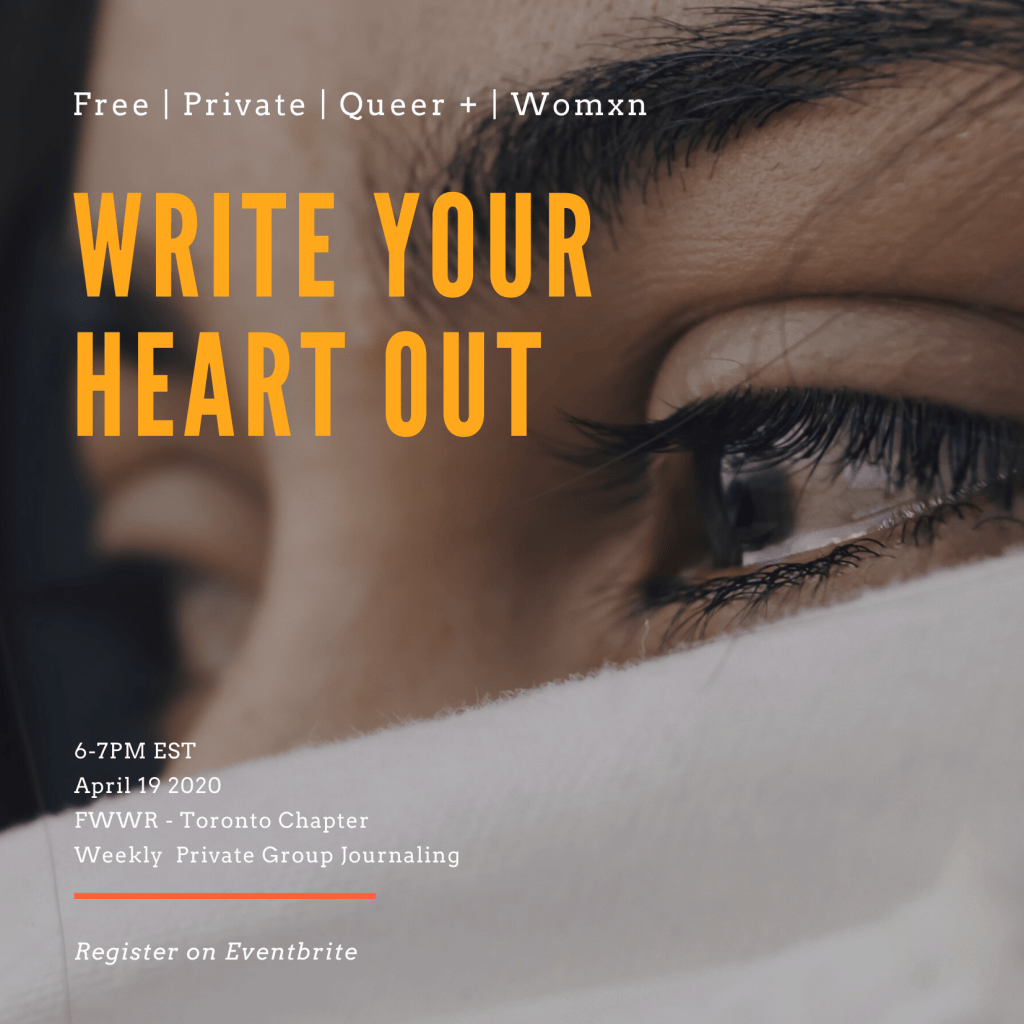
Toronto Chapter: Write Your Heart Out Workshop
A guided journal workshop and meditation for womxn that need support in expressing their raw emotions.
Partner
For Women Who Roar
Background:
Designed in support of For Women Who Roar (FWWR) a storytelling movement dedicated to helping women heal their stories.
Led by women, FWWR Chapters are offered across North America, to hold a safe and intimate space, for womxn to connect and heal together.
The intention of the space held by the FWWR Toronto Chapter is to foster a community that feels safe enough for womxn to express their rawest emotions; free of judgement. It is honing in on the art of expressive journaling in an effort to ground these deep rooted emotions, and to ensure that each week ends with meaning and gratitude. Write Your Heart Out is a positive and healing resource and tool that womxn can integrate into their daily habits for the rest of their lives.
The landscape:
I had struggled for many years to have a consistent journaling practice. Rather than focusing on releasing feelings and thoughts on paper, I found myself hyper-focused on my poor grammar, spelling, style of writing, and fixing typos. I struggled with “mind-dump” exercises because it felt counter-intuitive to the way I was taught to express thoughts in previous writing workshops. I wanted to know whether I was alone in feeling this way, and if there were any other resources to support me in my journey.
Evaluative and Strategic Research:
Main goals
- To understand the psychology behind journaling and group wellness practices
- To evaluate whether there is a need that is not being met in the market
Methodology and Procedure:
Usability study:
- Meet with the For Women Who Roar (FWWR) team and Chapter Leaders (women who ran workshops in partnership with FWWR across North America) for one hour biweekly to discuss findings, pitch ideas, and receive feedback
- Gathered feedback from workshop attendees and adjusted the structure of the program accordingly
Recruited participants:
- People that identified as women who signed up via Eventbrite
- Womxn that may or may not have had experience journaling
- Different age ranges and varying levels of comfortability in writing
My role:
- Connect and partner with FWWR
- Design a pitch for workshop idea to be presented to global chapter leaders
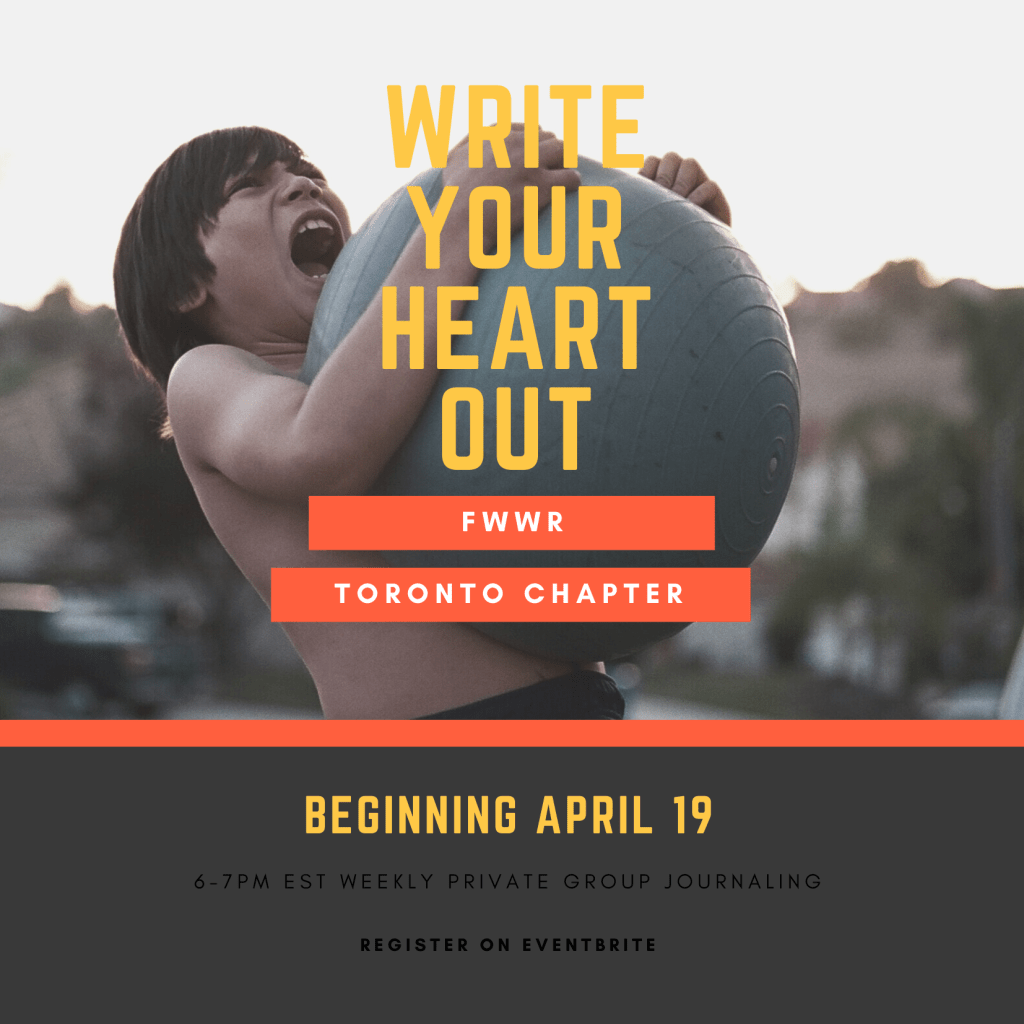
- Graphic design and copywriting of workshop ad
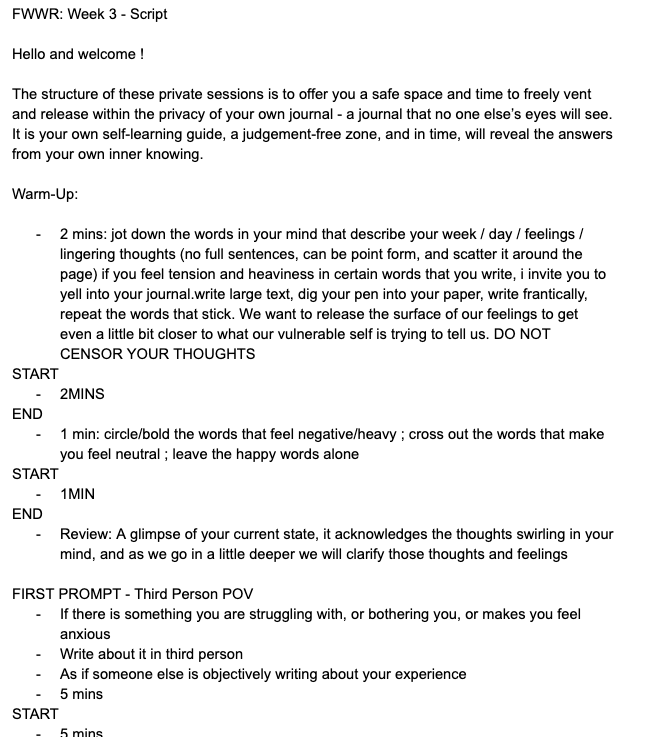
- Ideate, design, and develop weekly workshop script and journaling prompts
- Recruit attendees via eventbrite, word of mouth, and advertising through the FWWR community
- Collect feedback from attendees and adjust the workshop style according to attendees’ needs
The Idea:
Research shows that expressive writing can help individuals develop a more structured and adaptive understanding of themselves, others, and the world. Journaling is a self-reflection tool that helps the writer develop self-awareness, to feel grounded, and poses potential opportunities to transform limiting beliefs and better understand personal needs and aspirations.
Journaling is a cathartic, cost-effective way to make a difference in one’s daily well-being. It empowers the writer to detect unhealthy patterns in thoughts and behaviours, and allow greater control over their life by putting things into perspective. It can help shift a negative mindset to a more positive one.
What to be mindful of when journaling:
- To avoid putting pressure on yourself
- Stay grounded in the present moment by focusing on sensory details
- Notice and capture your self-talk
- It can take months-to-years to form a new habit, be patient
The Product:
Write Your Heart Out is a weekly group journaling mind-detox workshop for folks that identify as womxn or queer, with a goal of helping folks to write consistently at the end of their week (eventually daily), to support them in their mental health and wellness.

The value it provided:
Some feedback received: “I’ve never done this style of writing before and I find it interesting.” Regular weekly attendance demonstrated to me that there is a need that this workshop was meeting, however there were opportunities for improvement.
Process and Challenges
Attendee feedback: “It feels rushed.”
Limitations
Due to the group meeting time limit on zoom and my limited experience working with the tool at the time, I was only able to host the workshop live for 30 minutes. I then prompted attendees to hop onto a meditation on youtube after our 30 minutes were up, and encouraged them to reflect on their own after the meditation. This resulted in a rushed 30 minute session, and the experience was especially short for folks joining in late. There was feedback from attendees that wished the workshop ran longer, and some attendees expressed they wished there were more discussions during the workshop.
Impact and Results
The first workshop had 12 sign-ups via eventbrite with about six attendees present in the workshop. Two of the attendees were unable to join due to unfamiliarity with zoom, and about two to three attendees arrived late weekly.
As a result of careful analysis of weekly notes, and feedback, I made late-stage pivots to the structuring of the workshop and the prompts, however after week five attendance dropped to zero indicating that attendee pain points were not being met.
Potential next steps would be to explore how adjacent competitors in the writing-workshop and group wellness space address the needs of their attendees. There are also opportunities to research whether attendees respond better to unstructured group activities in writing workshops vs structured.
Reflecting a year later after this workshop has taken place, group video calls and collaboration platforms are much more accessible, with greater familiarity with these technologies; this may help to mitigate and address those previous tech pains that were prevalent during the first few iterations of the workshop.
 April Marie Canillo