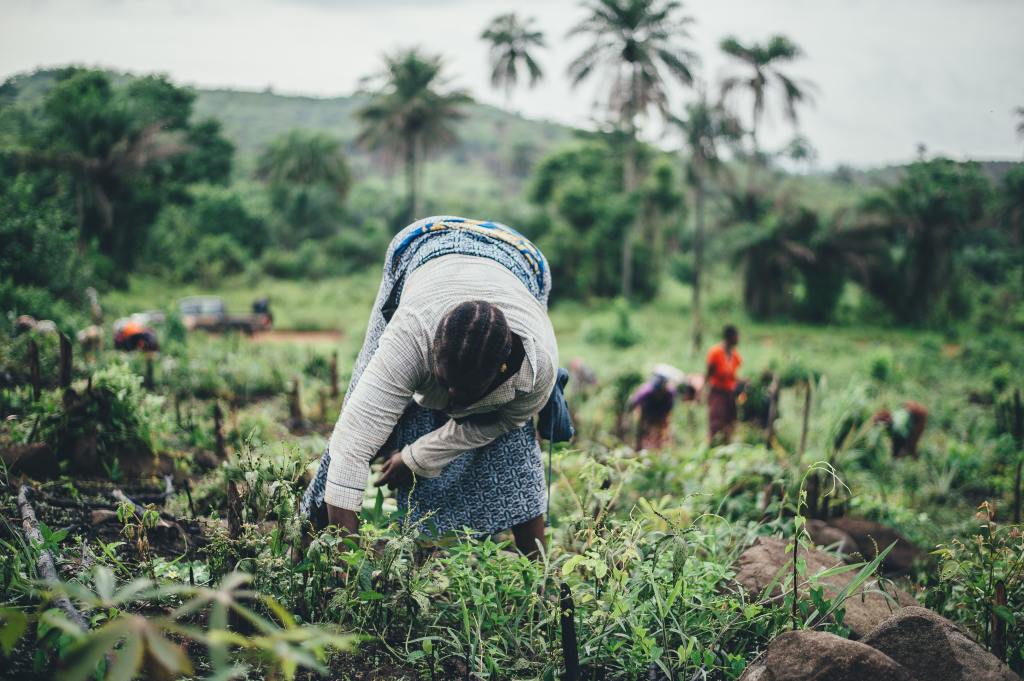
For many women, urban agriculture is a means to provide some form of food security, and a means of social interaction, self-fulfillment and escape from the obligations, relationships and hierarchies of everyday life.
Though these activities were seen to empower women and challenge patriarchal relations, this also evoked resistance. Women from Inity explained how they had their crops urinated on by men – believed to be an act of jealousy and a means to belittle them. Poor women need external support to overcome the downward-levelling norms in their society.
Many experienced urban agriculture as therapeutic – rather than a burdensome gender role; in fact, it seemed that the women who worked hardest at urban agriculture appeared to gain the greatest sense of self-worth. Alternatively, a young woman helping an elderly woman at one of the garden centres and gaining negligible economic gains defined her greatest benefit as time she had to share with an older, wiser role model.
In West Africa, there are reports of serious social unrest in response to the soaring costs of food in at least 5 countries (Cameroon, Burkina Faso, Côte d’Ivoire, Senegal and Maurita).
In Cape Town, 43% of female-centred households fall into the lowest income category.
Due to difficult economic and social conditions, and the absence of state welfare benefits, many urban households have been forced to adopt urban and periurban agriculture as an essential survival strategy to ensure basic food security and a source of income and employment.
Female-headed households relied heavily on the urban gardens for their household’s food security, regarding their garden as their most important source of food and an adequately balanced diet.
Women said that the high price of chemicals constituted the greatest barrier to the cultivation of high market value crops – restricting the size of the garden they wanted to cultivate, and forcing them to develop strategies to obtain money from spouse or if unmarried, borrowed money from relatives, friends and microcredit organizations to cover gardening costs.
The lack of education and training has been a crucial limitation to the success of gardening. For example, some female gardeners expressed not knowing which pesticides were needed to be applied to which crop, in what quantities, or how frequently. Certain small NGOs have organized workshops to educate urban farmers in Buea – but only invited heads of households, which disqualified some women from participating in training sessions, even though they were the main gardeners in the household.
The increase in food prices, especially in Buea, exacerbated the desperation of those lacking access to food, and the lack of land has forced people to compete for land.
Rather than fostering food self-sufficiency, prices of garden crops are increasing, making nutritious vegetables less accessible to many poor people – accentuating food crisis especially in towns with high urbanization rate.
The social benefits of urban agriculture are particularly relevant for female cultivators on the Cape Flats – where social networks among women provided both emotional and practical support to counteract some forms of oppression from their patriarchal context, and increase their access to food and other resources when the cultivators share land, work together, and donate portions of their harvest to neighbours.
A case study on Cape Flats found that the average unemployment rate was at 29% in 2011, and due to the low employment, food security was high – especially amongst some of the poorest areas averaging 80% (Philippi and Khayelitsha). In response to this, in 2014 four NGOs promoted urban agriculture among the households by providing training services (Abalimi, Soil for Life, SOzo and Inity). Natural goods and services were promoted and harnessed through encouraging biodiversity, the conservation of water, the building of soil structure using organic inputs, and the banning of petro-chemical inputs. Each NGO provided practical training sessions on cultivating seedlings, soil preparations, transplanting seedlings, composting, pest management, harvesting and seed capturing – followed by regular visits from the NGOs to assess whether key principles are being applied and provide advice on common challenges (soil health, pest control, etc.)
These findings call into question the overemphasis of income as the key determinant of success of urban agriculture in Africa.
Social capital creates informal support networks as well as channels of access to external resources. The new “family” the women find in urban agriculture provides emotional and practical support in a way many had not previously experienced. Through creating these close bonds, urban agriculture directly counteracts the isolation and vulnerability so many of these women experience.
These NGOs indicated that empowering women required a “lot of shaping, educating and mentoring” to enable them to cultivate their own crops successfully. Thus, it appears as if the type of support NGOs provide facilitates the networking and mentorship that is essential to seeing urban agriculture actually empower women.
Potential solutions culminated from multiple sources in addressing food insecurity:
- Prices of farming chemicals and equipment should be reduced so that these are affordable to low income gardeners
- Training programmes on new farming techniques (example: application of farm chemicals, with a focus on female farmers)
- Stimulation of community-based organization focusing on urban gardening
- Pro-female government policies (though difficult because it requires a fundamental change in people’s thinking)
- More underdeveloped land should be made available to interested gardens
- Provision of cooled, public storage facilities ao that the severe post-harvest losses could be reduced
- Organization of agricultural shows to encourage farmers and offer them further opportunities for education
- Increased accessibility to microcredit to both men and women who hope to venture into gardening
- Gender-sensitive policy measures
REFERENCES
Maconachie, R., Binns, T., & Tengbe, P. (2012). Urban farming associations, youth and food security in post-war freetown, sierra leone. Cities, 29(3), 192-200. doi:10.1016/j.cities.2011.09.001
Ngome, I., & Foeken, D. (2012). “My garden is a great help”: Gender and urban gardening in Buea, Cameroon. GeoJournal,77(1), 103-118
Olivier, D. W., & Heinecken, L. (2017). Beyond food security: Women’s experiences of urban agriculture in cape town. Agriculture and Human Values, 34(3), 743-755
 April Marie Canillo