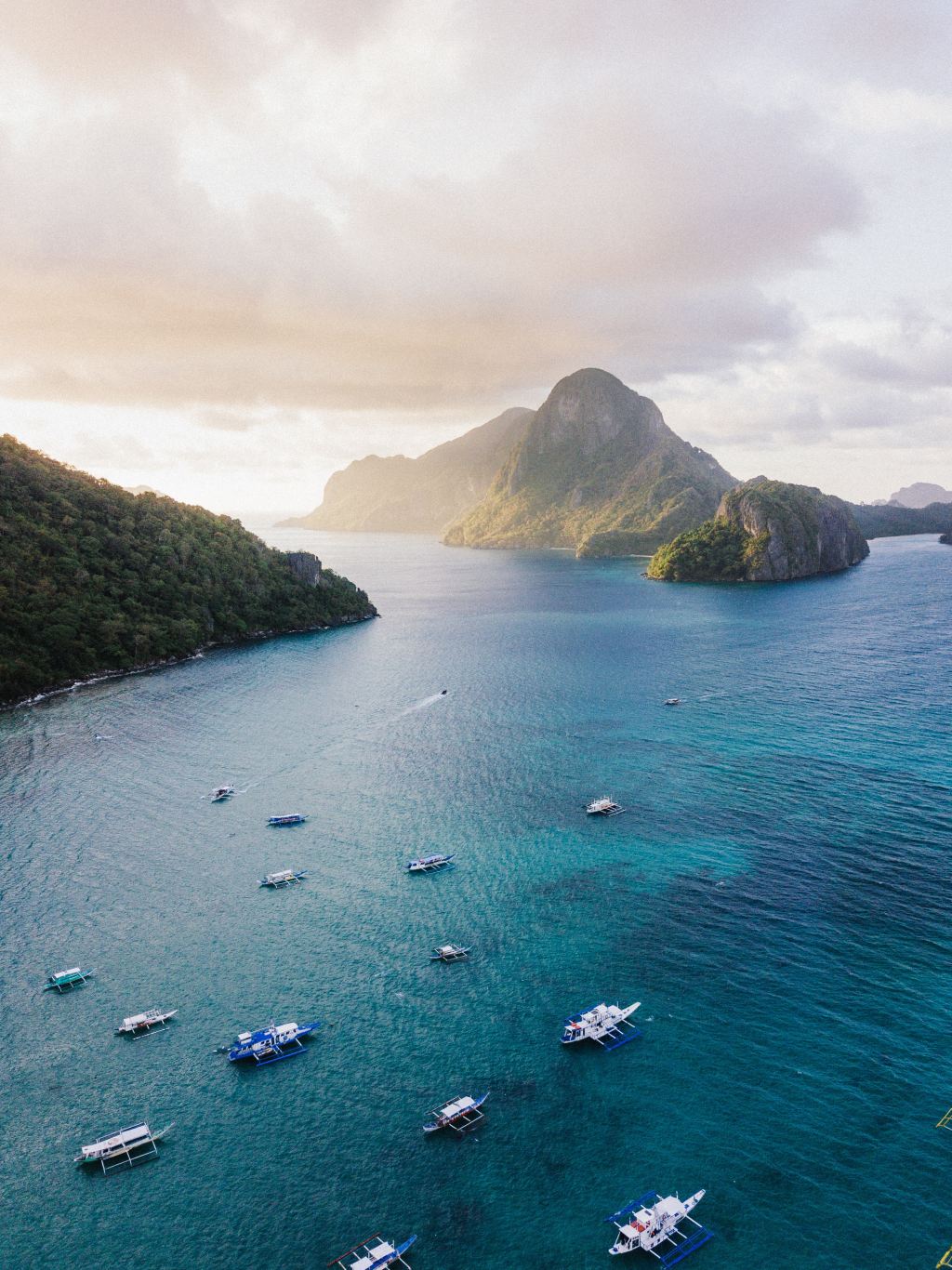
Land is more than just soil and dirt under the feet of life, or resources of economic potential. For many, land is representative of their country’s sovereignty and national identity. For the people of Kiribati, whose land sits just 3 meteres above sea level, the rising global temperatures and sea levels mean a threat to the survival of their entire population. To have to watch their land and livelihoods erode, is to watch the symbol of their ancestors history of sacrifice, disappear.
The rise of global temperatures above 1.5 °C is expected to threaten and destroy natural and human systems – some regions more so than others. The especially vulnerable regions are those that do not have the economic means to adapt and survive on their own – the Caribbean small island states and The Republic of Kiribati. But before these islands become engulphed by the ocean, human settlements, climate-sensitive economic sectors such as tourism and fisheries, as well as rich biodiversity are under threat, and are already being highly impacted by climate change.
If global countries are unable to meet the target of keeping temperatures below the 1.5 °C threshold, the impact will be devastating. Scientists warn that while the frequency of Atlantic storms may decrease, the intensity of the hurricanes are likely to increase. Already, more than 75% of the Carribean’s reefs are considered threatened due to bleaching and intense hurricanes. It is projected that in 10 years, the climate-related threats will be so high in the Eastern Carribean that it will push the proportion of reefs at risk to 90%, and up to 100% in 30 years. The Carribean holds its place as one of the world’s 35 most biodiverse regions – an exceptionally important region to protect for global biodiversity conservation.
The sea-level rise, ocean acidification, altered rainfall patterns, unpredictability of droughts, storm surges and extreme high winds are already in effect. Kiribati was one of the first Pacific island states to prepare and finalize a National Adaptation Program of Action (NAPA) in 2007 to address the possible health impacts of climate change on its people. The lack of enforcement of pollution controls and limited investment in water quality monitoring means that the highly permeable sands and shallow areas of fresh water that the nation’s people rely on, are extremely susceptible to pollutants. At times of intense rainfall events over the central Pacific, increases in pollutant runoff exacerbates the rates of waterborne diseases, putting its people at high risk of illness through the contamination of food by bacteria, viruses and toxins, and especially diseases that are sensitive to changes in temperature – finding breeding sites in cans, bottles, shells and coconut husks. The inequalities are further exacerbated in rural communities with limited choices in water resources – in some cases the drinking water is brown due to the effects of Diesel oil leaking from nearby power stations. To add insult to injury, there has been a drastic increase in hospitalizations, due to the increasing ambient temperatures alone.
To address the increasing temperatures, Urban Planners and Caribbean architectural designers play a key role in promoting the use energy-efficient and natural infrastructure in their regions. In the case of the Coral Reefs, though they may not disappear entirely, with some species already showing far greater tolerance to climate change and coral bleaching than others, the designation of marine protected areas is crucial to protect remaining coral reefs in the region and to sustiain their tourism and fishery industries for economic survival. In some extreme cases or worst-case scenarios, relocation may be the only option – as is the case for Georgetown and Paramaibo, or are required to make far more difficult decisions as is the case for small, highly vulnerable islands like Guyana and Belize.
REFERENCES
Kuruppu, N. (2009). Adapting water resources to climate change in Kiribati: the importance of cultural values and meanings. Environmental Science and Policy. 12: 799-809. doi:10.1016/j.envsci.2009.07.005
McIver, L., Woodward, A., Davies, S., Tibwe, T. and Iddings, S. (2014). Assessment of Health Impacts of Climate Change in Kiribati. International Journal of Environmental Research and Public Health. 11: 5224-5240. doi:10.3390/ijerph110505224
Mycoo, M.A. (2018). Beyond 1.5C: vulnerabilities and adaptation strategies for Caribbean Small Island Developing States. Regional Environmental Change. 18: 2341-2353. https//doi.org/10.1007/s10113-017-1248-8
 April Marie Canillo